Naive Ornaments Family: Where Playful Typography Meets Professional Creative Workflow
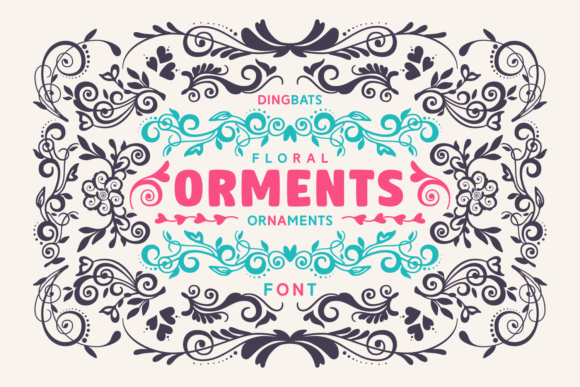
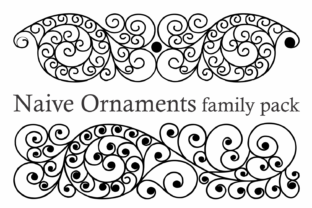
The Naive Ornaments Family is more than a decorative font pack—it’s a deliberate response to a quiet but powerful shift across design, publishing, and brand creation: the growing demand for authenticity, tactile warmth, and human-centered expression in digital-first environments. Developed by Iza W of Intellecta Design, this colorful collection of ornaments—delivered in six meticulously crafted font files—bridges the gap between hand-drawn charm and production-ready precision. Unlike static clipart or raster-based assets, Naive Ornaments Family functions as true typographic tools: scalable, layerable, script-compatible, and fully compatible with industry-standard design software from Adobe Creative Cloud to Affinity Suite and even modern web publishing platforms.
A Font Pack Designed for Real Creative Workflows
At its core, Naive Ornaments Family reimagines how ornamentation operates in professional contexts. Ornamental elements are no longer afterthoughts—tacked on as PNGs or manually traced vectors—but integrated, adjustable, and context-aware components of the typography system itself. Each of the six fonts offers a distinct visual voice: from bold, chunky motifs ideal for packaging accents and signage, to delicate line-based flourishes perfect for book chapter dividers or stationery borders. Because they’re encoded as OpenType fonts, designers can access alternate glyphs, ligatures, and contextual substitutions directly through character palettes—no need to juggle dozens of individual SVG files or rely on inconsistent third-party icon libraries.
This technical foundation matters deeply for professionals who balance speed with intentionality. A freelance illustrator designing a children’s activity book can apply an ornament via keyboard shortcut, then instantly scale, recolor, or rotate it without losing resolution. A marketing team building a seasonal campaign for an artisanal coffee roaster can embed matching ornaments into email headers, social banners, and printed coasters—all using the same font license and consistent visual language. That interoperability isn’t incidental; it reflects a broader industry evolution toward unified asset systems, where type, color, and decoration share underlying logic rather than competing for attention.
Why “Naive” Isn’t Naïve—It’s Strategic Authenticity
The word naive in Naive Ornaments Family may evoke simplicity—but in today’s creative economy, that simplicity is highly calibrated. Consumers increasingly favor brands and publications that signal craft, care, and imperfection over sterile polish. Think of the rise of analog-inspired branding (think textured letterpress business cards), the resurgence of zine culture in indie publishing, or the preference for hand-lettered labels on small-batch food products. These aren’t nostalgic affectations—they’re signals of trustworthiness, transparency, and human involvement.
Iza W’s execution honors that nuance. The ornaments avoid cartoonish exaggeration or overly rigid geometry. Instead, they carry subtle irregularities in stroke weight, gentle asymmetry in shape, and rhythmic variation in spacing—qualities that echo real-world making: ink bleeding slightly on paper, a slight wobble in a hand-cut stencil, the organic pause between brushstrokes. That “naive” quality translates directly into emotional resonance: readers subconsciously register warmth, approachability, and intention. For entrepreneurs launching lifestyle brands—or educators designing inclusive classroom materials—this isn’t just aesthetic preference. It’s a functional differentiator in crowded digital spaces where attention is scarce and authenticity is algorithmically rewarded.
Fitting Into Larger Creative and Technological Shifts
Naive Ornaments Family arrives at a moment when two major forces are converging: the maturation of variable font technology and the acceleration of cross-platform content creation. While variable fonts dominate headlines for their ability to compress weight, width, and optical size into single files, ornament families like this one represent the next frontier—variable expression. Though not technically variable fonts themselves, the six included styles function as a coordinated system that supports expressive range *without* sacrificing stability. You don’t need a developer to implement them; you don’t need custom CSS or plugin dependencies. They work out of the box in InDesign, Illustrator, Canva Pro, Figma (via font plugins), and even modern word processors like Microsoft Word or Google Docs (with desktop font installation).
This accessibility aligns with a broader trend: the democratization of high-fidelity design tools. As more creators—from solopreneurs managing their own Shopify stores to nonprofit communications staff handling full campaigns—take ownership of visual output, the barrier between “designer-only” assets and “everyone-can-use” resources continues to fall. Naive Ornaments Family sits squarely in that sweet spot: sophisticated enough for agency-level projects, intuitive enough for rapid iteration in fast-moving startup environments.
Practical Applications Across Industries
- Publishing & Editorial: Use ornaments as section breaks in illustrated nonfiction, chapter initials in middle-grade novels, or decorative bullet points in educational workbooks—enhancing readability while reinforcing thematic tone.
- Stationery & Print Products: Apply motifs consistently across greeting cards, wedding suites, and planner stickers—ensuring brand cohesion whether printed offset, digitally, or via print-on-demand services.
- Digital Marketing: Embed ornaments into email templates (via webfont support) or use them to generate branded social media graphics—maintaining visual continuity from website to Instagram story.
- Educational Tools: Teachers and curriculum designers integrate them into worksheets, flashcards, and classroom posters to support visual learning and reduce cognitive load through familiar, friendly iconography.
- Product Packaging: Scale ornaments seamlessly from 2-inch jar labels to 48-inch retail displays—no pixelation, no redraws, no licensing ambiguity.
Meeting Evolving Expectations—Without Compromise
What makes Naive Ornaments Family especially relevant now is how it responds—not reactively, but proactively—to shifting expectations around sustainability, efficiency, and inclusivity in creative practice. Sustainability here isn’t just environmental (though vector-based assets do reduce file bloat and server load); it’s also about creative sustainability—reducing repetitive labor, minimizing version-control headaches, and enabling long-term consistency across evolving brand guidelines.
Efficiency gains are measurable: a designer updating a holiday catalog no longer spends hours replacing outdated PNG ornaments across hundreds of pages. With font-based ornaments, a single style update propagates globally. And inclusivity emerges quietly but significantly—through legibility at multiple sizes, high-contrast glyph options, and cultural neutrality in motif design (avoiding culturally specific symbols in favor of universally resonant shapes: spirals, stars, leaves, waves).
These aren’t features listed in a spec sheet. They’re outcomes—built into the architecture of the family from conception. That’s why professionals across disciplines are paying attention: because Naive Ornaments Family doesn’t ask users to adapt to its constraints. Instead, it adapts to theirs—supporting faster iteration, clearer storytelling, and more humane creative processes.
Looking Ahead—Typography as Infrastructure
As AI-assisted design tools grow more capable—and more prevalent—the value of intentionally crafted, human-authored assets like Naive Ornaments Family only increases. Algorithms can generate infinite ornament variations, but they rarely understand the weight of a tapered stroke, the rhythm of uneven spacing, or the cultural resonance of a particular curve. What sets this family apart isn’t novelty for novelty’s sake. It’s fidelity—to craft, to context, and to the people who use it every day to build meaning, connection, and beauty.
In a landscape where creative tools multiply but creative clarity grows rarer, Naive Ornaments Family serves as both anchor and accelerator: a reliable, joyful, and deeply practical resource for anyone committed to making work that feels human—without sacrificing professionalism, scalability, or precision.