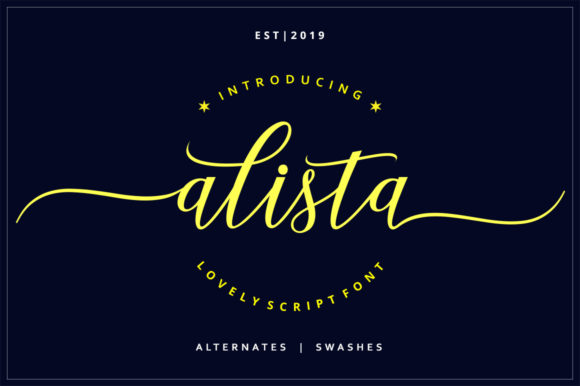
Alista: Where Modern Calligraphy Meets Everyday Design
Typography is no longer just about legibility—it’s about resonance. In a world saturated with digital interfaces, algorithm-driven feeds, and templated visuals, audiences respond more deeply to type that feels human, intentional, and expressive. That’s where Alista stands out: a modern calligraphy font crafted with subtle rhythm, graceful contrast, and quiet confidence. It’s not ornate for ornament’s sake—its elegance is functional, its flow purposeful.
What Makes Alista Different From Other Script Fonts?
Not all calligraphy-inspired fonts age well—or translate across contexts. Many rely on exaggerated flourishes that overwhelm at small sizes or collapse in digital environments. Alista avoids that trap. Its letterforms balance organic movement with clean structural integrity: soft entry strokes, consistent pressure modulation, and open counters that preserve readability even at 16px. Unlike vintage scripts that evoke nostalgia without flexibility, Alista feels contemporary—not retrofitted, but designed for today’s constraints and expectations.
It works equally well in a minimalist wedding invitation suite and as a bold header on a Shopify product page. That versatility isn’t accidental. The spacing, kerning pairs, and weight consistency were refined with real-world use in mind—not just aesthetic theory. You’ll notice it when setting body text alongside it, pairing it with a neutral sans-serif like Inter or Poppins, or exporting it for web use via variable font support (where available).
Why Designers Are Turning to Thoughtful Script Fonts Now
Over the past five years, we’ve seen a quiet but steady shift away from “safe” typography toward voices with character—especially in branding and digital storytelling. This isn’t about chasing trends; it’s about responding to how people engage with content. Users scroll faster, skim deeper, and form impressions in under two seconds. A well-chosen script font like Alista adds warmth without sacrificing clarity—acting as both visual punctuation and emotional shorthand.
Consider how brand identity has evolved: startups no longer default to sharp-edged geometric sans-serifs to signal innovation. Instead, they pair restrained layouts with expressive accents—like Alista used sparingly in a logo lockup or hero section—to suggest craftsmanship, care, and authenticity. Similarly, educators building online courses, freelancers launching portfolios, or boutique retailers curating Instagram Stories are choosing fonts that reflect their values—not just their industry.
Practical Uses That Go Beyond the Obvious
Yes, Alista shines in wedding stationery and luxury fashion branding—but its usefulness extends further than many assume.
- Website headers and CTAs: When paired with generous line height and ample whitespace, Alista creates memorable first impressions without slowing load times—especially when self-hosted or loaded via lightweight @font-face declarations.
- Email subject lines (as image fallbacks): While web fonts don’t render reliably in email clients, designers often export short Alista phrases as crisp SVGs or PNGs—adding distinction to campaigns where inbox visibility matters.
- Print-on-demand product mockups: Because Alista includes extended Latin characters and basic OpenType features (like contextual alternates), it holds up well across apparel tags, tote bag prints, and enamel pin designs—even at low resolutions.
- Educational handouts and workshop materials: Teachers and trainers report stronger engagement when using Alista for section headers or quote callouts—its gentle curves feel inviting, not intimidating, especially for adult learners returning to creative practice.
The key isn’t using Alista everywhere—it’s knowing where a single line of it carries disproportionate weight.
How Alista Fits Into Evolving Creative Workflows
Design tools have changed dramatically—not just in capability, but in who uses them. Canva, Figma, and Adobe Express now empower marketers, founders, and educators to produce polished assets without formal training. In that context, quality free resources like Alista matter more than ever. It removes friction: no licensing checks, no budget approvals, no vendor coordination. Just download, install, and apply—with predictable results.
But accessibility remains essential. Alista performs well in high-contrast modes and scales cleanly across devices. When used as a display font (never body text), it meets WCAG contrast guidelines against light or dark backgrounds—provided color choices are intentional. That practical reliability is why it’s become a quiet staple in design systems where inclusivity and efficiency coexist.
Realistic Recommendations for Getting Started
If you’re new to working with script fonts—or specifically with Alista—start small and observe how it behaves in your environment:
- Test it at multiple sizes: Try Alista at 24px, 36px, and 60px in your preferred editor. Note where letter spacing tightens or loosens naturally—and adjust tracking manually only if needed.
- Pair it deliberately: Avoid stacking multiple decorative fonts. Alista pairs best with humanist or geometric sans-serifs (e.g., Lato, Manrope, or IBM Plex Sans) that share similar x-heights and proportions.
- Limit its role: Use it for one primary function per layout—either headlines, logos, or pull quotes—not all three. Consistency builds recognition; overuse dilutes impact.
- Check rendering on mobile: Preview on iOS and Android devices. Some older Android versions substitute fonts unexpectedly; testing ensures your intended tone survives the handoff from screen to screen.
And remember: Alista is a tool—not a solution. Its value emerges when aligned with clear intent. A wedding planner using it for envelope addressing conveys attention to detail. A sustainable skincare brand applying it to ingredient labels suggests care and transparency. A freelance developer adding it to a portfolio hero section signals creative fluency beyond code.
Looking Ahead—Without Overpromising
Typography won’t replace strategy, research, or empathy—but it can amplify them. As AI-generated visuals become more common, hand-informed type choices like Alista gain quiet significance. They’re anchors of intentionality in automated workflows. They remind viewers that someone made this choice—not an algorithm optimizing for clicks.
We’re unlikely to see script fonts dominate UI interfaces anytime soon. But their thoughtful integration into digital experiences will continue growing—not as decoration, but as deliberate voice. Alista fits squarely in that space: accessible enough for beginners, refined enough for professionals, and expressive enough to carry meaning without explanation.
So whether you’re sketching a logo on paper, prototyping a landing page in Figma, or preparing slides for a client pitch, consider what Alista brings beyond aesthetics: rhythm, restraint, and a subtle nod to craft in an increasingly transactional landscape. It doesn’t shout. It invites. And sometimes, that’s exactly what your audience needs to pause, connect, and remember.